
Maritime tensions effectively neutralising the Strait of Hormuz and complicating Red Sea passages, the global EXIM industry is shifting heavily toward the Cape of Good Hope. What started as a temporary emergency detour has now become the new operational baseline for global trade.
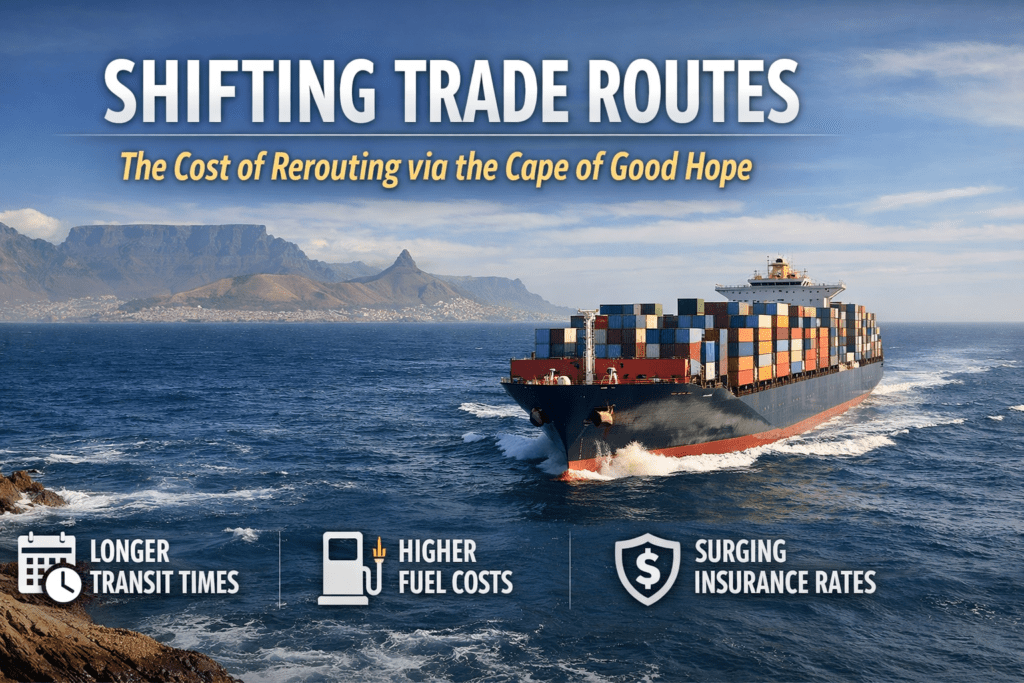
Global shippers, choosing between holding out for Gulf routes or accepting the Cape detour completely changes the math on landed costs and delivery timelines.
Here is the breakdown of what changes when cargo goes south.
Cost-Per-Day Summary:
| Factor | Hormuz/Suez Route | Cape of Good Hope Route |
|---|---|---|
| Extra nautical miles | Baseline | +3,500 to 4,000 nm |
| Extra sailing days (Asia-Europe) | Baseline | +10 to 14 days |
| Fuel cost premium per voyage | Baseline | +$500K to $1M |
| Freight rate increase | Baseline | +30–50% on India lanes |
| Emergency Conflict Surcharge | None | $2,000–$4,000/container |
| War risk premium (VLCC) | ~$100K per transit | $400K+ (or uninsurable) |
| Cargo insurance premium | Baseline | +150–200% |
| Spot container rate (Asia–US West Coast) | ~$1,800–$2,200/40ft | $4,500+ |
Transit Time & Sailing Days:
Rerouting away from the Middle East and taking the long way around Africa fundamentally alters ocean freight schedules.
That distance gap is 3,500 to 4,000 extra nautical miles per voyage. In sailing days, that translates to:
- 7 to 10 additional days on Persian Gulf to North America or Indian west-coast routes
- 10 to 14 additional days on Asia-Europe routes
Fuel Cost: The Bill Per Voyage
A large container vessel burns between 50 and 80 metric tons of fuel per day at sea. At 10 to 14 extra sailing days, the additional bunker consumption per voyage works out to roughly $500,000 to $1 million in direct fuel cost before any carrier markup.
Fuel surcharges on affected lanes have risen 15–25% since the crisis began. A container that previously carried a $400 fuel surcharge now carries $500 to $600.
Insurance Premiums:
- War risk premiums surged more than 300% compared to January 2025 levels
- A VLCC that previously paid roughly $100,000 for a Hormuz transit now faces over $400,000
- Cargo insurance on Gulf-routed shipments is up 150–200%
The risk isn’t just financial. Approximately 170 containerships and 450,000 TEU of cargo were stranded or drifting in the Gulf of Oman in early March, unable to safely exit the Hormuz zone.