
As U.S. importers wait on a Supreme Court decision that could upend the last year of work with constantly changing tariffs, a new tool from Flexport is offering businesses a way to quantify what has largely been an abstract legal debate: how much money they might actually get back.
Flxport launched a Tariff Refund Calculator, a public-facing tool designed to estimate potential refunds tied to tariffs imposed under the International Emergency Economic Powers Act (IEEPA). The timing is deliberate. The Supreme Court is weighing a challenge to the federal government’s authority to levy broad tariffs using emergency powers, which is how the tariffs were able to fluctuate so broadly and rapidly in 2025.
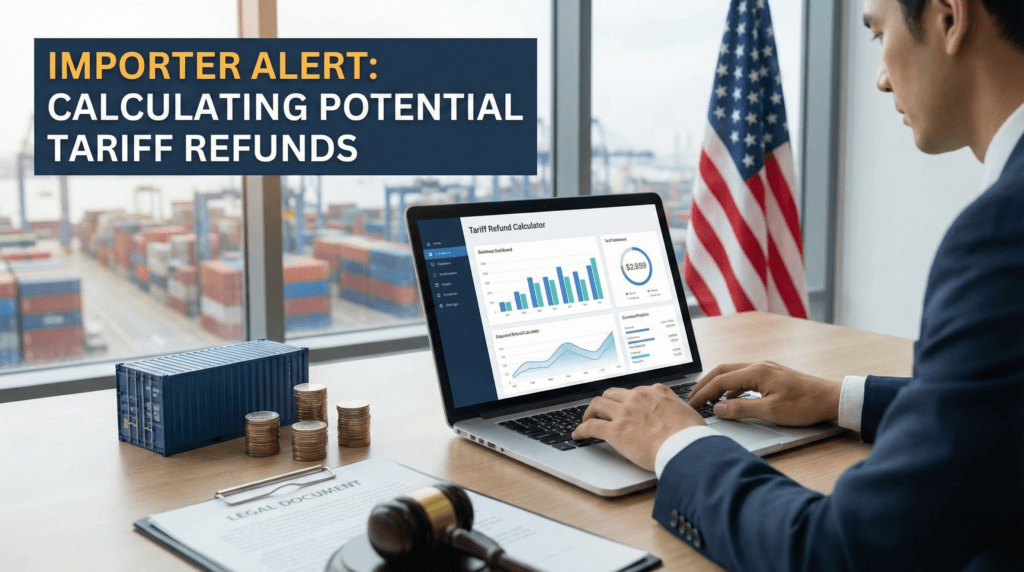
“With customers awaiting the ruling, we built this tool to help them scenario-plan,” said Ryan Petersen, Founder and CEO of Flexport. “We can’t predict the Court’s decision, but we can give businesses clearer insight so they’re prepared for whatever comes next.”
Flexport’s calculator is designed to address that uncertainty early. By allowing importers to upload their U.S. Customs and Border Protection entry data, the tool estimates how much they may have paid in affected tariffs and what portion could be refundable if the Court sides with importers. Rather than waiting for a decision and scrambling to assess exposure, companies can now see a preliminary dollar figure tied directly to their historical shipments.
The Supreme Court case centers on whether the executive branch overstepped its authority by using IEEPA, a law traditionally associated with sanctions and national emergencies, to impose wide-ranging tariffs. During oral arguments, several justices questioned whether Congress intended the statute to function as a de facto tariff mechanism, raising the possibility that the duties could ultimately be struck down. While no outcome is guaranteed, the tone of the questioning has prompted importers, trade attorneys, and customs professionals to prepare for a scenario in which refunds are suddenly on the table.
The launch also comes as U.S. Customs and Border Protection has taken steps to modernise and centralize refund processing, signaling that the agency may be preparing for an influx of claims if the Court rules against the government. While officials have not commented on the potential scope of refunds, trade experts say businesses that can quickly substantiate their payments will be better positioned to act.
For importers operating on thin margins, the possibility of recovering past tariff payments could influence everything from pricing strategies to capital allocation decisions. Even the chance of a refund changes how companies think about cash flow and risk in the months ahead.