
The ongoing Strait of Hormuz shutdown has severely disrupted the flow of commodities out of the Arabian Gulf, which normally handles 20 percent of global oil and 30 percent of fertilizer exports.
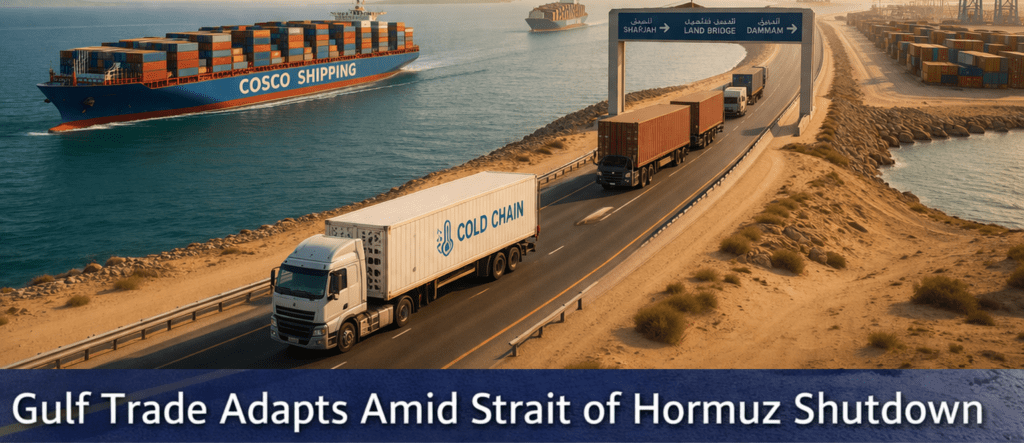
However, the closure is also creating a massive bottleneck for inbound cargo, cutting off a region that relies heavily on imports for its food supply.
With the strait inaccessible, most of the world’s leading container lines have suspended direct cargo bookings into the Gulf market. To keep freight moving, carriers are increasingly turning to overland alternatives through Saudi Arabia and the United Arab Emirates, despite limited capacity and higher costs.
Robert Maersk Uggla, chairman of Maersk, recently highlighted the pressing need for food imports into the Gulf, particularly cold chain deliveries. He noted that the carrier is actively finding alternative ways to bring cargo into the region while the strait remains closed.
China Cosco, the world’s fourth largest container line, announced it is resuming bookings for the United Arab Emirates, Saudi Arabia, Bahrain, Qatar, Kuwait, and Iraq. While initially reported as a resumption of Hormuz transits, Cosco is actually discharging containers at Fujairah and moving the freight overland.
This strategy mirrors arrangements previously made by CMA CGM, which is moving cargo overland through neighboring ports on the Gulf of Oman, Arabian Sea, and Red Sea. Cosco noted that this service remains subject to change based on the volatile regional security situation.
To bypass the strait entirely, logistics providers are setting up new intermodal chains. Gulftainer has partnered with Mawani, the Saudi port authority, to establish a feeder service that connects Khor Fakkan to Sharjah by land, and then continues onwards by sea to Dammam. This land bridge across the UAE effectively simulates an all water voyage from the Indian Ocean to the key Saudi seaport without navigating the blocked strait.