
The Strait of Hormuz remains open to commercial shipping, but strictly for vessels that are not linked to “Iran’s enemies.” Ali Mousavi, Iran’s representative to the International Maritime Organization (IMO) and ambassador to the UK, outlined this restriction in a recent interview with Xinhua.
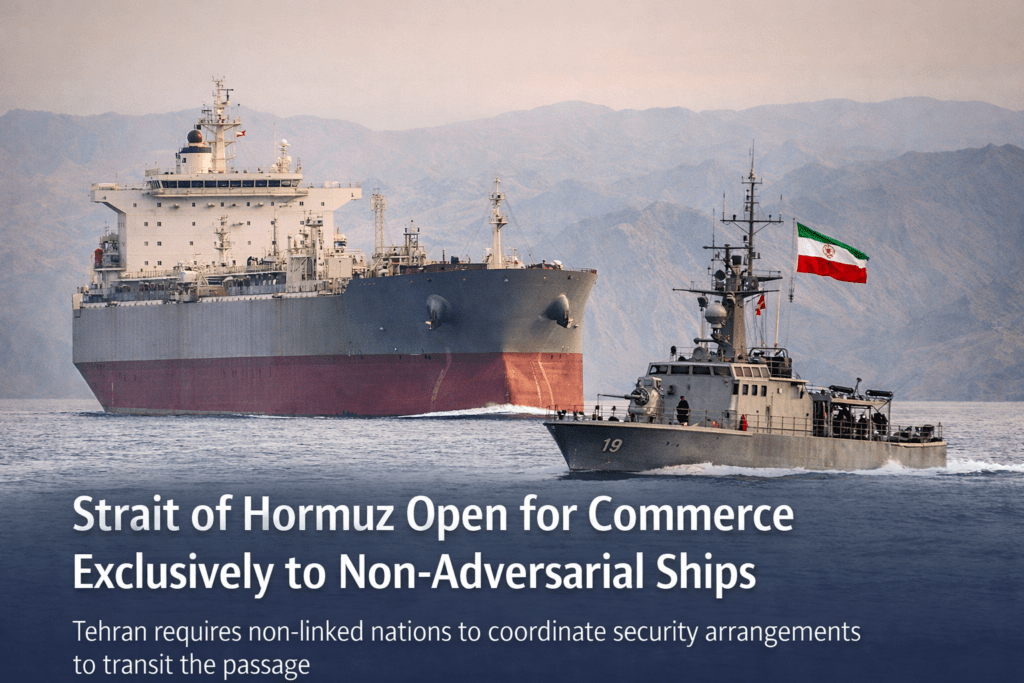
According to Mousavi, Tehran intends to continue cooperating with the IMO to improve maritime safety and protect seafarers in the Gulf. However, to safely transit the waterway, ships that do not belong to adversarial nations must proactively coordinate their security and safety arrangements directly with Tehran.
Mousavi emphasised that while diplomacy remains Iran’s priority, a complete cessation of aggression and mutual trust are prerequisites for resolving the maritime standoff. He stated that the root of the current situation in the Strait of Hormuz lies in the ongoing US and Israeli attacks against Iran.
These transit conditions were detailed just before US President Donald Trump issued a 48 hour ultimatum, threatening to target Iranian power plants if the strait is not fully reopened.
The escalating US, Israeli, and Iranian conflict has already deterred most commercial vessels from navigating the narrow strait.
As a critical maritime conduit that handles approximately a fifth of global oil and liquefied natural gas (LNG) supplies, the restricted access and threat of attacks are raising immediate concerns about a potential global energy shock.