
As Venezuela resumes its oil trade under U.S. management, the industry is discovering that old habits die hard. State oil company PDVSA has started shipping cargoes again, often using the same “shadow fleet” vessels that have moved sanctioned oil for years. But now, those ships are facing a new problem: strict inspections.
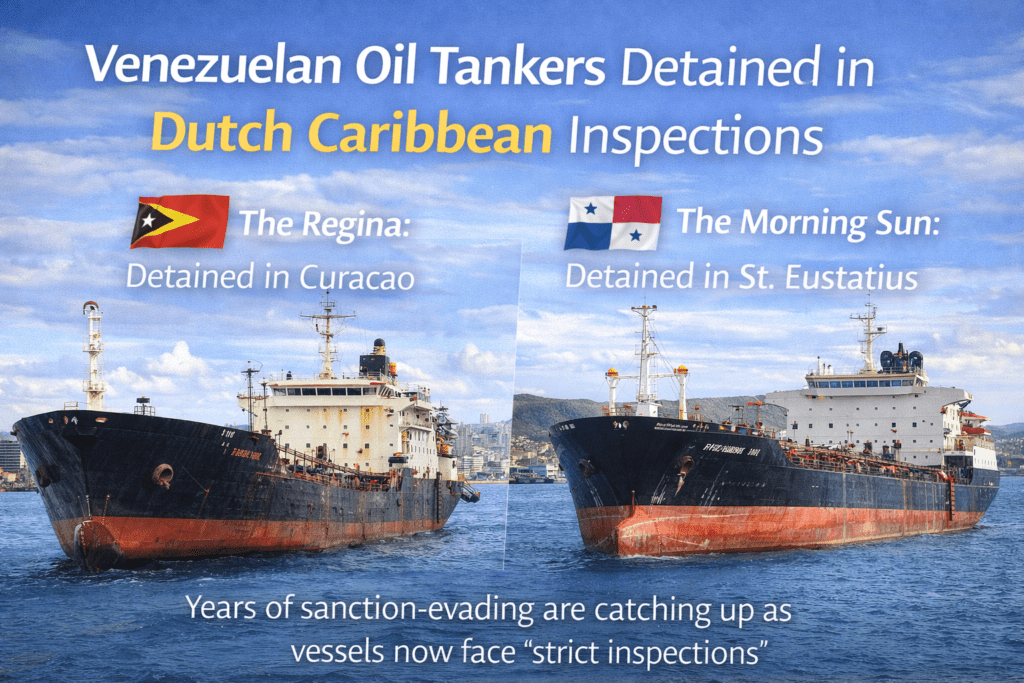
https://www.caribbeanmou.org/The Detentions The Caribbean MOU on Port State Control (CMOU) has reported the detention of two aging tankers in Dutch jurisdictions.
- The Morning Sun: Detained in St. Eustatius.
- The Regina: Detained in Curacao.
The detention of the Regina is particularly awkward for Curacao. The island is keen to become a hub for newly legitimate Venezuelan oil, and Prime Minister Gilmar Pisas had personally welcomed the ship upon its arrival.
However, the vessel failed to pass muster. Beyond standard safety deficiencies, she arrived flying the flag of East Timor a country that doesn’t even have an international shipping registry. East Timor has previously asked ports to investigate ships making this false claim.
Meanwhile, in St. Eustatius, inspectors boarded the Morning Sun, a 1996-built tanker flying the Panamanian flag. Her last inspection outside Venezuela was back in 2018. Inspectors found too many issues to let her sail, citing problems with fire doors, fire pumps, and watertight hatches.
These detentions signal a turning point. While “clean” tankers chartered by Western buyers are now calling at Venezuelan ports without issue, the shadow fleet is struggling to survive in compliant jurisdictions. The experience of these two vessels suggests that if Venezuela wants to trade with the world, it will have to abandon the ghost ships and upgrade to tonnage that can actually pass a safety check.