
Italy’s cabinet new migration bill that grants authorities the power to impose temporary naval blockades on vessels attempting to enter its territorial waters. Introduced by Prime Minister Giorgia Meloni’s government, the legislation aims to curb irregular migration and must now pass both chambers of parliament.
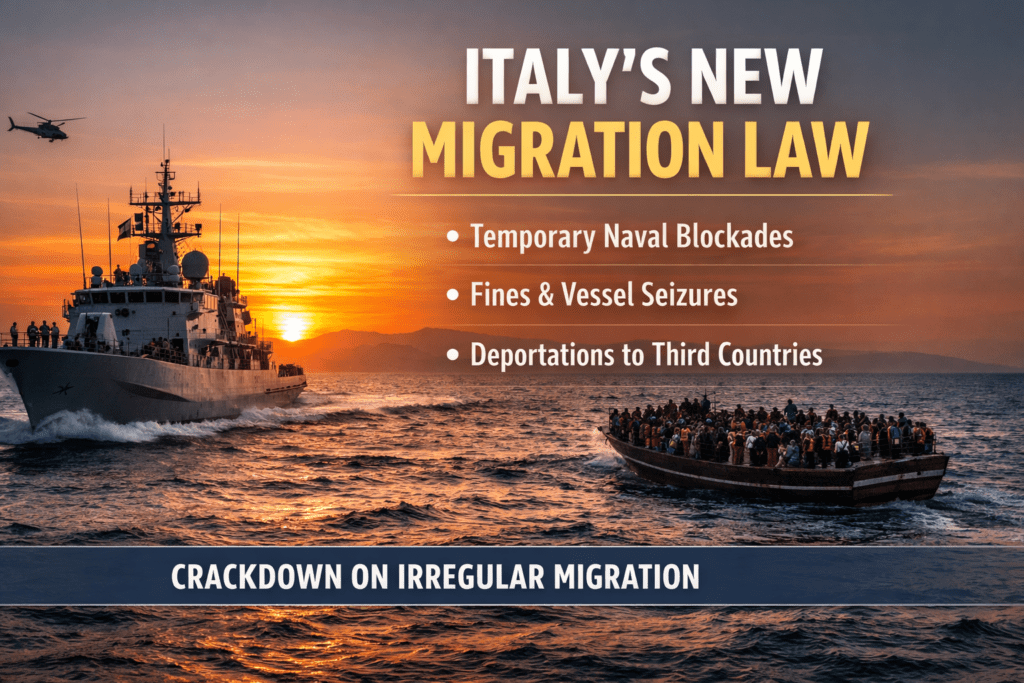
The core of the bill allows for the blocking of ships for up to 30 days (extendable to six months) if they pose a threat to public order or national security.
Specific triggers for a blockade include:
- Concrete risks of terrorist infiltration.
- Exceptional migratory pressure compromising border management.
- Global health emergencies or high-level international events.
Vessels found breaching these rules face stiff penalties. The legislation sets fines of up to €50,000 (approx. $59,400) for violations. Repeat offenses can result in the confiscation of the vessel, a provision expected to significantly impact humanitarian rescue ships operating in the Central Mediterranean.
The bill outlines that intercepted migrants may be transported to third countries with which Italy has specific agreements. This provision is designed to reactivate offshore processing centers in Albania, which have been largely inactive for two years due to legal challenges.
This move aligns with the European Parliament’s recently adopted migration framework, which permits member states to deny asylum to migrants from designated “safe” countries. Foreign Minister Antonio Tajani noted that the EU’s confirmation of the safe country list validates Italy’s strategy.
Current Situation in the Central Mediterranean
Despite government efforts, the route remains active and dangerous.
- Year-to-date arrivals by sea stand at approximately 2,000, down from 4,400 during the same period last year.
- The International Organization for Migration reports nearly 490 people missing in the Central Mediterranean so far this year.
Including the International Rescue Committee, warn that the new EU measures could lead to migrants being sent to countries where they lack ties or face exploitation. Parliament is scheduled to debate the bill in the coming weeks.