
Saudi Arabia’s oil exports moving through the Red Sea are holding steady for now, despite a recent drone attack on a critical cross country pipeline.
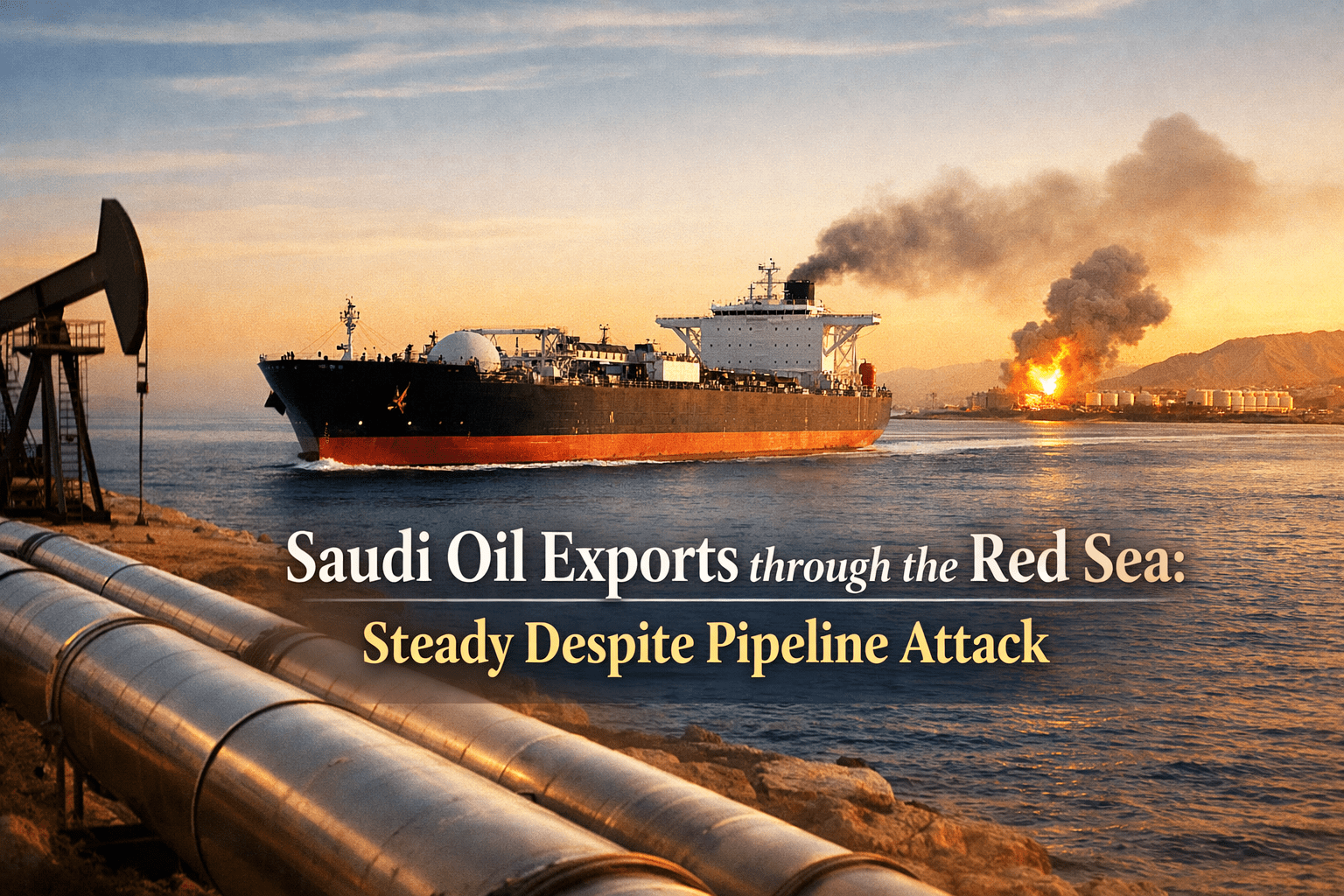
The Wednesday strike which occurred hours after a ceasefire in the Iran damaged one of 11 pumping stations along the 746 mile (1,200 kilometer) conduit connecting the eastern oil fields to the western Red Sea coast. According to an energy ministry official cited by the state run Saudi Press Agency, the damage has reduced the pipeline’s throughput by 700,000 barrels a day.
Despite the reduced flow rate, it is too early for the attack to impact export volumes from the Yanbu terminals. Given the transit speed through the pipeline, it will take several days before the lower flow rate physically curbs the amount of crude reaching the Red Sea port.
To mitigate the near shutdown of the Strait of Hormuz, Saudi Arabia had previously quadrupled its crude shipments from Red Sea terminals to approximately 4 million barrels a day since late February. Tanker tracking data compiled by Bloomberg indicates that exports currently remain stable at this elevated level.
Contingency Plans for Crude Allocation
If the volume of crude reaching the Red Sea port does eventually drop, the kingdom has contingency options to protect its export volumes. The pipeline also supplies local refineries, power stations, and water desalination plants. Saudi Arabia may choose to trim the crude allocated to these domestic facilities to ensure international export levels are preserved.
ALSO READ: Saudi Arabia Reroutes Gulf Cargo to Red Sea Ports to Bypass Hormuz
Strategic Importance of the Pipeline
The East-West pipeline possesses a nameplate capacity of 7 million barrels a day. It serves as the sole major alternative route for transporting oil when tanker traffic through the Strait of Hormuz is restricted. With approximately 2 million barrels a day consumed domestically, the pipeline can theoretically facilitate up to 5 million barrels for export, making it a vital asset for delivering Persian Gulf crude to global energy markets.