
Volvo Autonomous Solutions (VAS) and global logistics provider DSV have officially commenced commercial autonomous freight operations in Texas. The partnership reached a milestone with the first commercial truckload hauled by a Volvo VNL Autonomous vehicle, which integrates Aurora Driver self-driving technology.
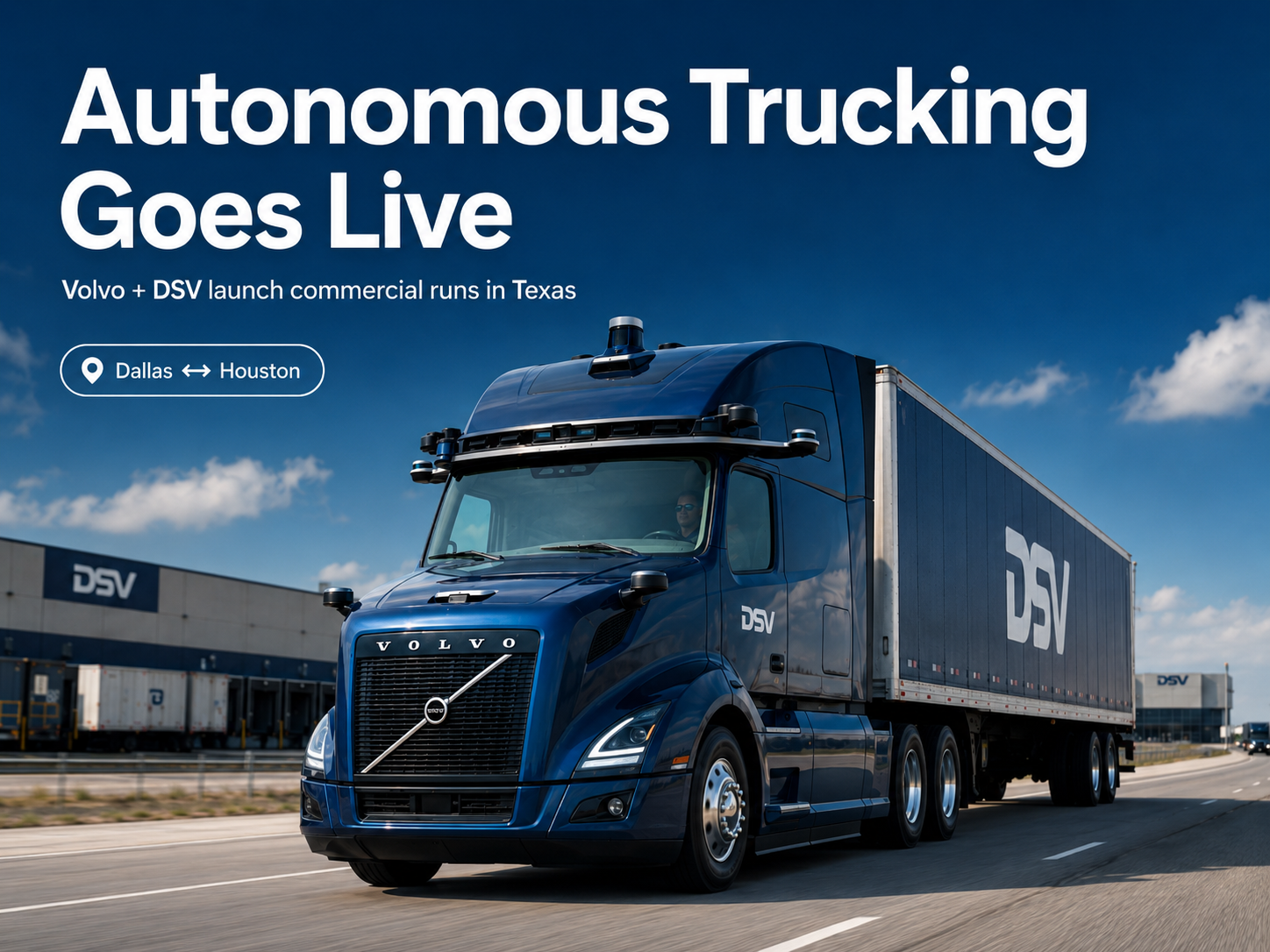
The operations are currently running on a depot-to-depot basis, connecting Aurora’s terminals in Dallas and Houston. This route is integrated directly into DSV’s existing logistics flows to test and refine autonomous transport at scale.
The Volvo VNL Autonomous System
The Volvo VNL Autonomous is the centerpiece of Volvo’s “Autona” freight solution. This end-to-end transport system combines purpose-built hardware with self-driving software from Aurora and Waabi.
Key features of the current deployment include:
Safety Drivers: In compliance with current operational standards, a safety driver remains behind the wheel during this initial phase.
Route Scalability: The Dallas-Houston corridor serves as a foundation for future expansion into additional long-haul lanes.
Proven Reliability: Volvo Autonomous Solutions has logged over one million miles in local and regional freight operations since 2023, providing the data necessary to support this commercial rollout.
ALSO READ:Maersk Opens 1.1 Million Sq Ft Automated Distribution Center in Singapore
Addressing Logistics Challenges
For DSV, the integration of autonomous trucks targets several critical industry pain points. Helmut Schweighofer, CEO of DSV Road, noted that the production-level setup offers opportunities to improve safety, driver comfort, and asset efficiency.
By deploying autonomous solutions within a commercial network, DSV aims to:
Support Round-the-Clock Operations: Autonomous trucks can operate continuously, maximizing equipment utilization.
Mitigate Driver Shortages: The technology provides a scalable solution to the growing lack of long-haul drivers across the industry.
Improve Efficiency: The depot-to-depot model allows for seamless integration into complex, large-scale logistics networks.
This collaboration reflects a broader industry shift toward integrating high-level automation into established supply chains to ensure long-term operational resilience.