
The U.S. Treasury Department has issued a temporary, 30-day sanctions waiver permitting Indian refiners to receive Russian crude oil cargoes that are already at sea.
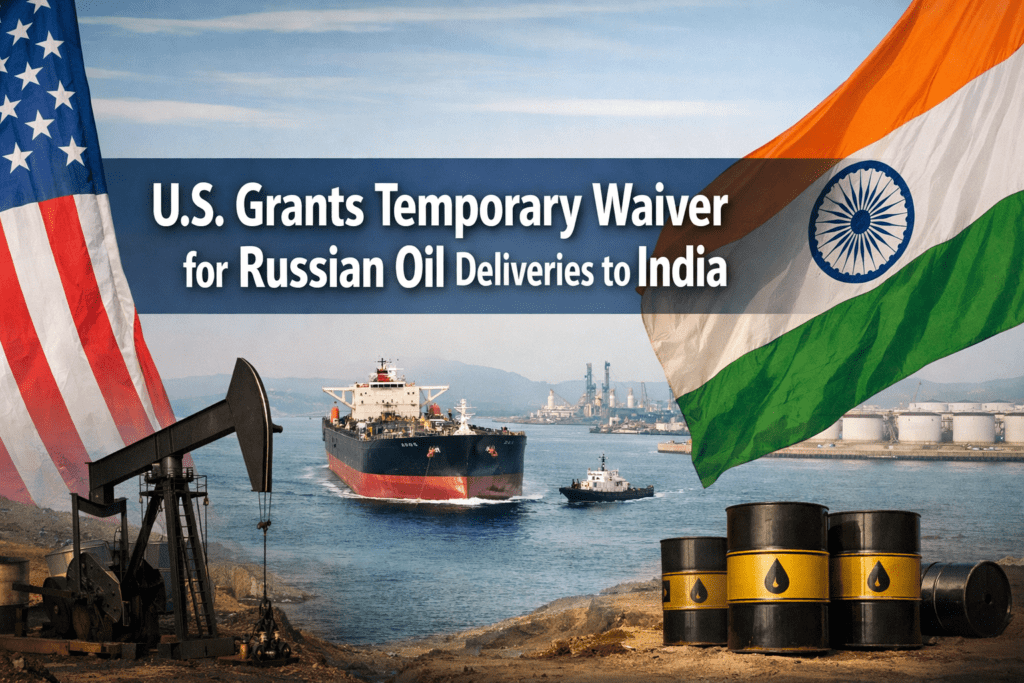
This narrowly targeted move is designed to prevent global energy market disruptions caused by the effective closure of the Strait of Hormuz, while still limiting financial benefits to Moscow.
Treasury’s Office of Foreign Assets Control (OFAC), Russia-related General License 133 permits the sale, delivery, and offloading of Russian-origin crude and petroleum products, provided the cargo was loaded onto vessels on or before 12:01 a.m. EST on March 5, 2026.
The waiver strictly expires at 12:01 a.m. EDT on April 4, 2026. Under these terms, cargoes must be delivered specifically to Indian ports, and the buyer must be an entity organised under Indian law. The license also covers standard operational services required to finish the voyage, such as bunkering, crewing, insurance, piloting, and port services.
It explicitly does not authorise any transactions involving Iranian-origin goods or services beyond what is strictly necessary to complete these permitted deliveries.
U.S. Treasury Secretary Scott Bessent described the waiver as a limited stop gap to keep stranded oil flowing into the global market without generating new revenue for the Russian government.
Prior to this waiver, India was already scaling back its Russian crude purchases. According to the shipping association BIMCO, India accounted for roughly one-third of its seaborne oil imports from Russia in 2025 (representing 25% of Russia’s total seaborne crude exports). However, during the first five weeks of 2026, BIMCO data shows India’s imports from Russia fell 34% year-over-year as new sanctions and shifting trade dynamics began to take hold.