
The Strait of Hormuz crisis is changing the 2026 VLCC market fast. Normally, 20% of global oil exports move through this passage. However, rising risks have forced shipowners to pause their trips. As a result, the EXIM industry faces a sudden and severe shortage of available ships.
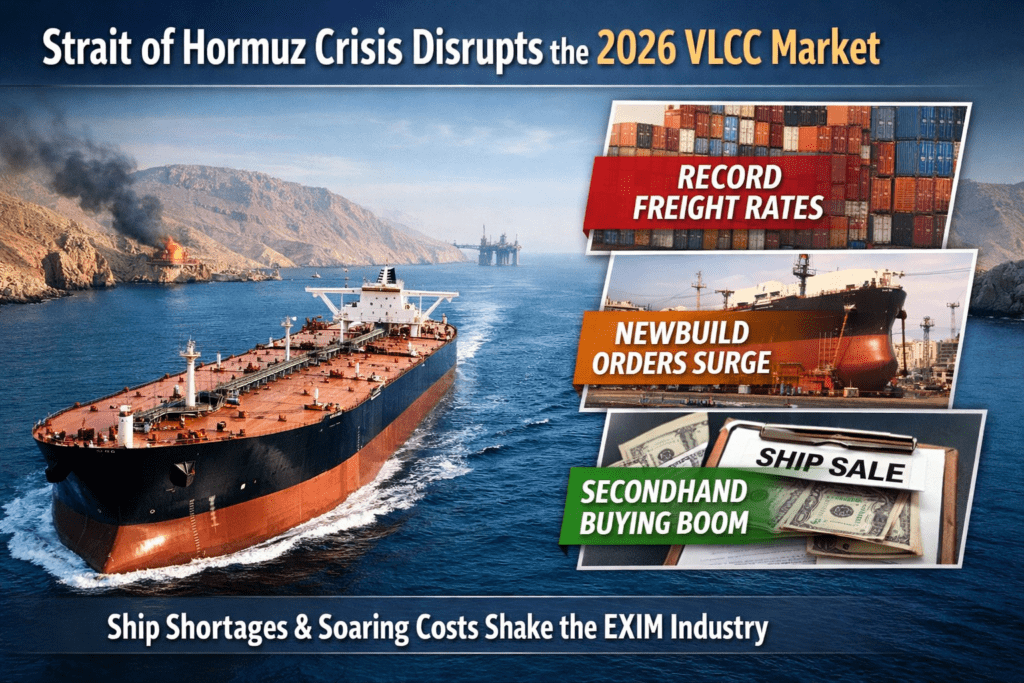
Key Impacts:
- Plunging Transits: First, only six full VLCCs passed through Hormuz in early March. This is a huge drop from the 365 trips seen earlier this year.
- Record Freight Rates: Consequently, freight rates are breaking records. For instance, MEG to China TD3 rates shot up to 485,959 USD per day. Markets are clearly panicking over trapped oil.
- Newbuild Surge: To cope, shipowners are rushing to secure future ships. In fact, buyers ordered 88 new vessels worth 10.4 billion USD. This marks a massive 633% increase from last year.
- Secondhand Market: Sales of existing ships jumped by 407%. Notably, Sinokor bought 54 VLCCs. Therefore, they now control 76% of the 2026 buying market.
What does this mean for the EXIM sector?
Saudi Arabia and the UAE do have backup pipelines. Yet, these pipelines cannot replace the 20 million barrels per day that need the Hormuz route. Ultimately, this bottleneck traps oil. Because of this, energy traders will face very high freight costs. In addition, ship supply will stay extremely tight for a long time.