
Konecranes has completed its acquisition of Coapsa Control’s nuclear and port service divisions, effective 1 July, folding the Spanish firm’s Viladecavalls team and crane servicing expertise into its Industrial and Ports Services network in Catalonia.
No financial terms were announced, and the deal is small. What it signals is not. Konecranes has spent years buying its way deeper into crane servicing rather than crane building, and Coapsa fits that pattern precisely.
The Coapsa acquisition adds a Viladecavalls service base
Konecranes has added Coapsa Control’s team and its Viladecavalls site to a Spanish service network that already covers both ports and heavy industry. Coapsa serviced cranes for two very different sets of customers, ports and nuclear facilities, and Konecranes bought both divisions.
The acquisition took effect on 1 July and supports the company’s stated plan to grow its Industrial and Ports Services divisions. The Coapsa team moves across with the business, keeping the technicians who already know the equipment on the tools.
Nuclear crane servicing is the harder half of the deal
Coapsa’s nuclear service work is the part of this deal that a competitor cannot easily replicate. Servicing cranes inside a nuclear facility means clearances, qualifications, and safety documentation that take years to accumulate, and that a buyer cannot hire into overnight. Port crane servicing is competitive and regional. Nuclear crane servicing is a niche with a moat around it.
For Konecranes, buying an established nuclear-qualified team in Catalonia is faster and cheaper than building and certifying one from zero.
ALSO READ:Konecranes Launches ESP.4 Mobile Harbor Crane for Smaller Ports
What the deal means for Konecranes’ service strategy
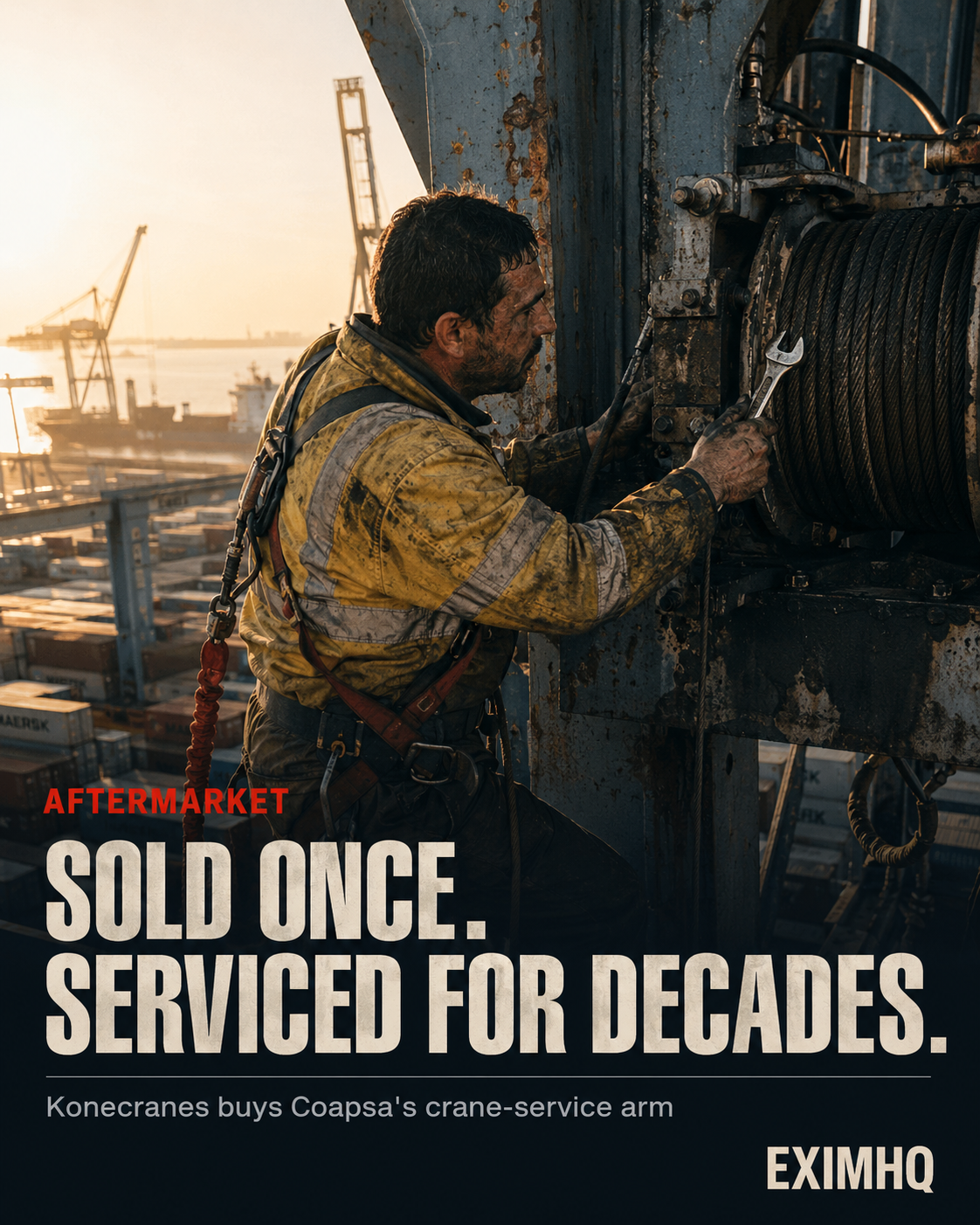
For anyone tracking Konecranes’ Spain expansion, the logic here is aftermarket revenue, not equipment sales. A crane is sold once. It is then serviced for decades through inspections, spare parts, overhauls, and modernizations, and that recurring service line carries steadier margins than the machines themselves.
OEMs learned long ago that the money in cranes is not in selling them. It is in keeping them running.
Coapsa Control’s port services and its installed customer base hand Konecranes both revenue it can bank and a base to sell more service across Catalonia and the wider Spanish market. Catarina Lopez, Konecranes’ Port Services manager, said the acquisition keeps “the in-depth knowledge and expertise of Coapsa’s team” available to nuclear and port customers.
Expect more of these. The European crane-service market is fragmented into small regional firms like Coapsa, and Konecranes has both the balance sheet and the incentive to keep consolidating it, because every acquisition adds recurring service revenue that costs far less to buy than to build. The nuclear-qualified teams will go first. Those are the ones nobody else can easily replace.