
A.P. Moller Maersk has officially increased its intermodal fuel fees across Australia and New Zealand. The ocean carrier noted that rising global energy prices are continuing to heavily impact inland transport costs, requiring rate adjustments to maintain reliable service.
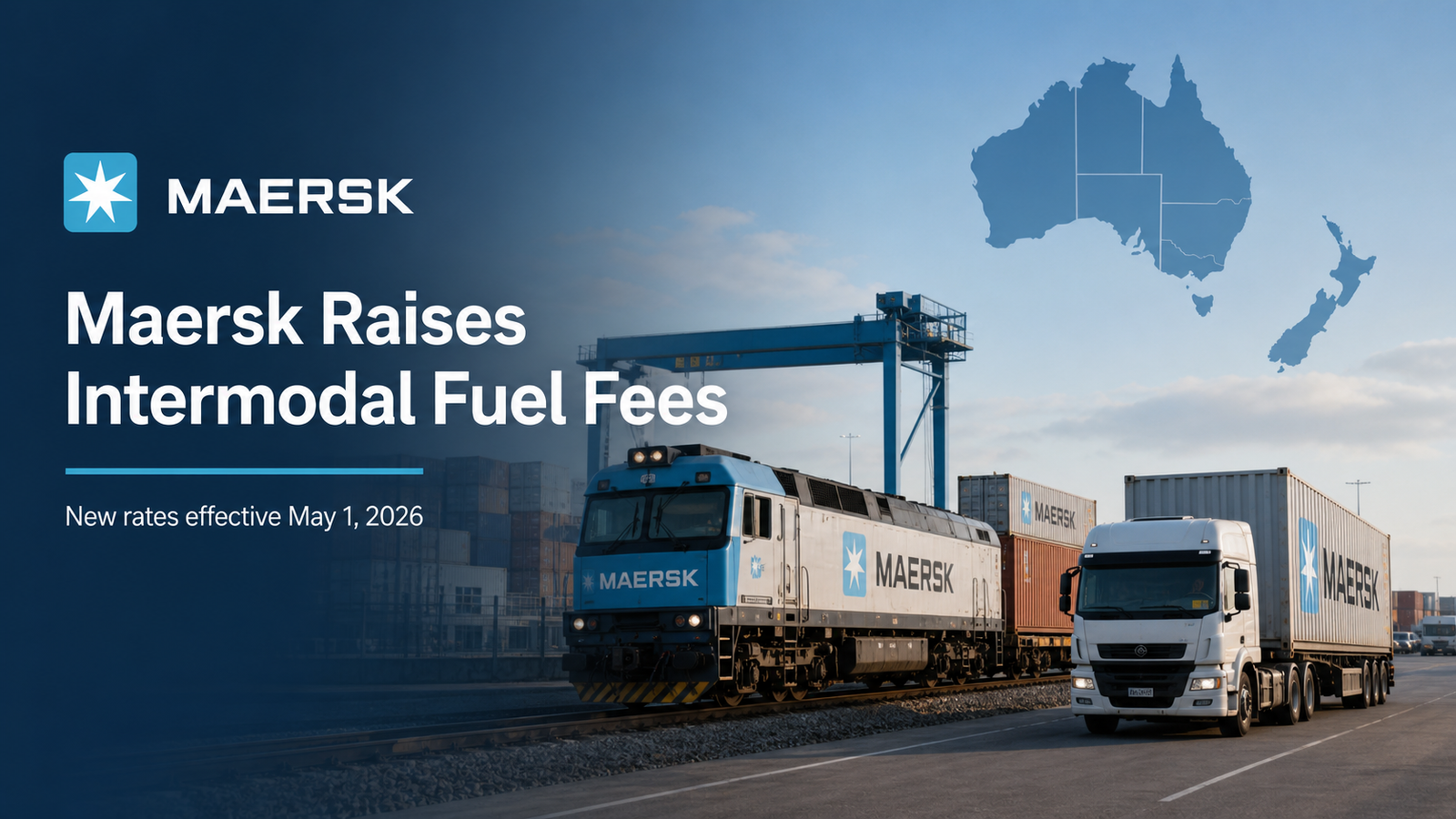
The updated Intermodal Fuel Fee (EFS/IFS) will go into effect on May 1, 2026, and will be reviewed on a monthly basis. Shippers utilizing inland logistics services will see the following surcharge levels:
New Zealand: +27%
Australia (Victoria): +18%
Australia (New South Wales): +18%
Australia (Queensland): +18%
Australia (South Australia): +18%
Australia (Western Australia): +18%
Driven by Global Energy Volatility
According to Maersk, this sharp fee increase reflects the ongoing and severe volatility in global energy markets, largely driven by geopolitical tensions in the Middle East. The escalating situation around the Strait of Hormuz a critical maritime chokepoint through which approximately 20% of the global fuel supply passes has significantly tightened fuel availability and driven up global costs.
These harsh conditions are placing immediate financial pressure on landside and intermodal operations, directly impacting both regional trucking and rail services.
ALSO READ:Maersk Increases Cargo Insurance and Care Rates for Middle East Trade
Temporary Measures to Secure Capacity
Maersk initially introduced the Intermodal Fuel Fee in March 2026 as a temporary, emergency measure designed to maintain service reliability and secure transport capacity for its customers.
The carrier emphasized that this surcharge specifically applies to inland transport services and is engineered to reflect actual operational cost increases while ensuring strict continuity across its logistics network. Moving forward, Maersk stated that further adjustments to the fee may follow depending entirely on how the global fuel markets evolve.