
Mitsui O.S.K. Lines and IBM Japan switched on an AI ship monitoring platform on July 1, 2026, merging weather, navigation and geopolitical data into one feed built around MOL’s round the clock Safety Operation Supporting Center.
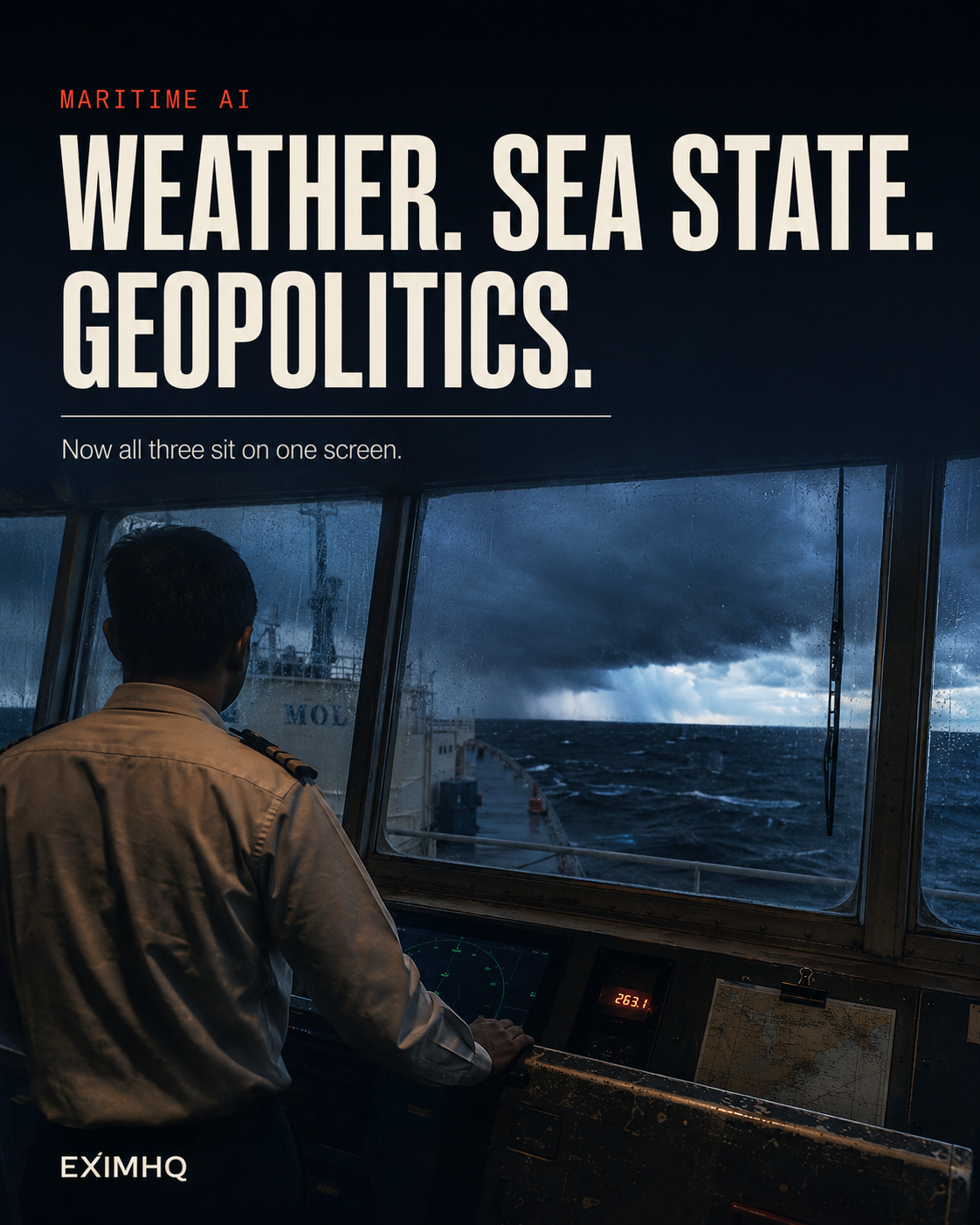
MOL has said shipping grew more complicated over the past few years, A bridge team now has to weigh threats that did not sit on the same dashboard, and often did not sit on any shared dashboard at all.
MOL’s AI ship monitoring platform merges weather, navigation and geopolitical feeds
The platform pulls together data MOL previously ran across separate systems: ocean and weather conditions, navigational status, and geopolitical developments, all into a single view for the crew. The stated aim is to tell the crew what they need to know at the moment they need it, rather than after.
The consolidation is a smaller claim than it sounds, and a more useful one. Data that lives in five systems is data nobody reads when the alarm is going off. Consolidating the feeds is the point, not a side effect.
The system also draws on voyage records and operating information to flag the specific risks a vessel faces in real time, and it carries past accident records and response case studies so it can surface a solution when a ship hits a situation the fleet has seen before.
The platform runs on MOL’s Safety Operation Supporting Center
MOL’s Safety Operation Supporting Center, or SOSC, monitors the company’s vessels worldwide around the clock and issues advice and corrective proposals to bridge teams making decisions. The AI platform sits on top of that existing desk rather than replacing it.
Building on an existing desk matters for how fast this could ship. The hard part of a monitoring system is not the software. It is the operational knowledge of what a crew needs and when, and SOSC already had that.
MOL’s India IT unit and IBM Japan supplied the AI
MOL INFORMATION TECHNOLOGY INDIA PVT. LTD. and IBM Japan built the AI layer, pairing SOSC’s ship-operations knowledge with IBM’s work on AI and data utilisation. The AI engineering came out of MOL’s India IT subsidiary.
MOL has placed the project inside its BLUE ACTION 2035 Phase 2 management plan, under the themes of safety and digital transformation.
ALSO READ:Kaleris Launches AI Yard Intelligence Suite for Container Terminals
What this means for fleet safety
The platform’s real claim is speed of decision, not new data. Everything it merges already existed somewhere inside MOL. The change is that a crew facing a threat no longer has to assemble the picture from scattered feeds under time pressure. The picture is assembled for them, with the risk already named.
The knowledge base is the quieter advance. A system that matches a live situation against past accident records turns institutional memory into something a bridge team can query in the moment, instead of something filed in a report nobody opens at sea.
MOL has tied the platform to BLUE ACTION 2035, which means the updates it is promising are reported against a plan, not left to goodwill. The harder question is the rest of the fleet. Once geopolitical risk becomes a standing input to routing rather than an occasional shock, siloed monitoring stops being a cost problem and turns into a safety one and the operators already running SOSC style desks are the ones positioned to bolt AI onto them first.