
DP World has added 700 trucks to its GCC road freight network, lifting land capacity by up to 35,000 truck trips a month across the Gulf’s ports, economic zones and inland corridors.
The order is not really about trucks. It lands after a stretch in which the sea leg through the region turned unreliable, and DP World answered the only other way it could by moving cargo overland, at volume, and then buying the fleet to keep doing it.
DP World’s 700-truck fleet adds 35,000 trips a month
DP World has bought 700 trucks to run first, middle and last-mile hauls across the six-nation GCC, carrying both containerised and non-containerised cargo. The fleet adds up to 35,000 truck trips a month on top of a network already running around 3,000 truck movements a day across the region. It supports domestic and cross-border trucking, and it is being deployed progressively rather than switched on all at once.
Raveen Guliani, DP World GCC’s logistics COO, said the trucks meet the Euro V emissions standard and that the company “will explore green energy vehicles in the future.” Worth marking that verb.
Every port operator learns the same lesson eventually. The container’s journey does not end at the quay, and the customer only remembers the leg that went wrong on the road.
ALSO READ:Maersk Eyes India-Made Containers Over China
Land freight became a hedge after Red Sea disruption
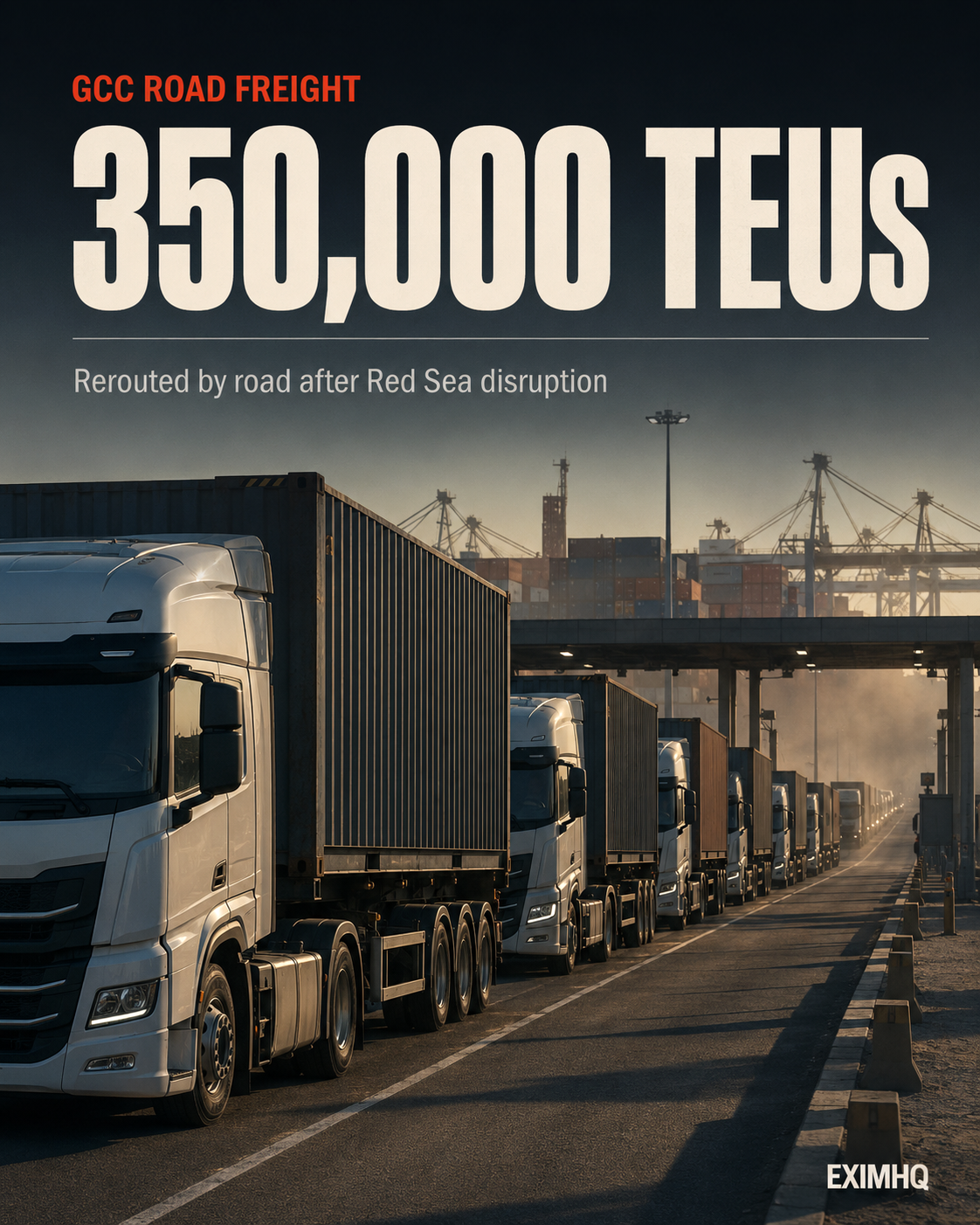
A company that controls only the quay is exposed the moment the sea leg fails. When Red Sea transits stalled, containers still had to move, and the route left was overland DP World pushed more than 350,000 TEUs across land rather than water during the disruption. Doing that on the open trucking market means paying whatever the market asks on the day the chokepoint closes. Owning 700 trucks converts that scramble into committed capacity.
The groundwork was already laid. DP World has opened fast-track bonded corridors running east-coast gateways straight into Jebel Ali Port, established a bonded corridor out of Sohar in Oman, and used Red Sea routing alternatives through the South Container Terminal at Jeddah Islamic Port. The trucks are what tie that corridor map into a single port-to-door service instead of a set of workarounds.
The trucks are Euro V today, with green-energy vehicles filed under “explore” the standard place capital goes to wait. The shift underneath is not waiting. DP World has committed a 700-truck fleet to a land network it now treats as core rather than contingency, and the Red Sea premium that pushed 350,000 TEUs onto the road shows no sign of easing. Expect port to door to stop being a selling point and start becoming the baseline every Gulf integrator gets measured against and the next fleet order is where the green-energy line gets tested against the invoice.