
Foreship, RINA’s naval architecture and marine engineering arm, has unveiled a Greek ferry design built for moderate speed and low running costs, for operators serving more than 200 islands on an ageing fleet.
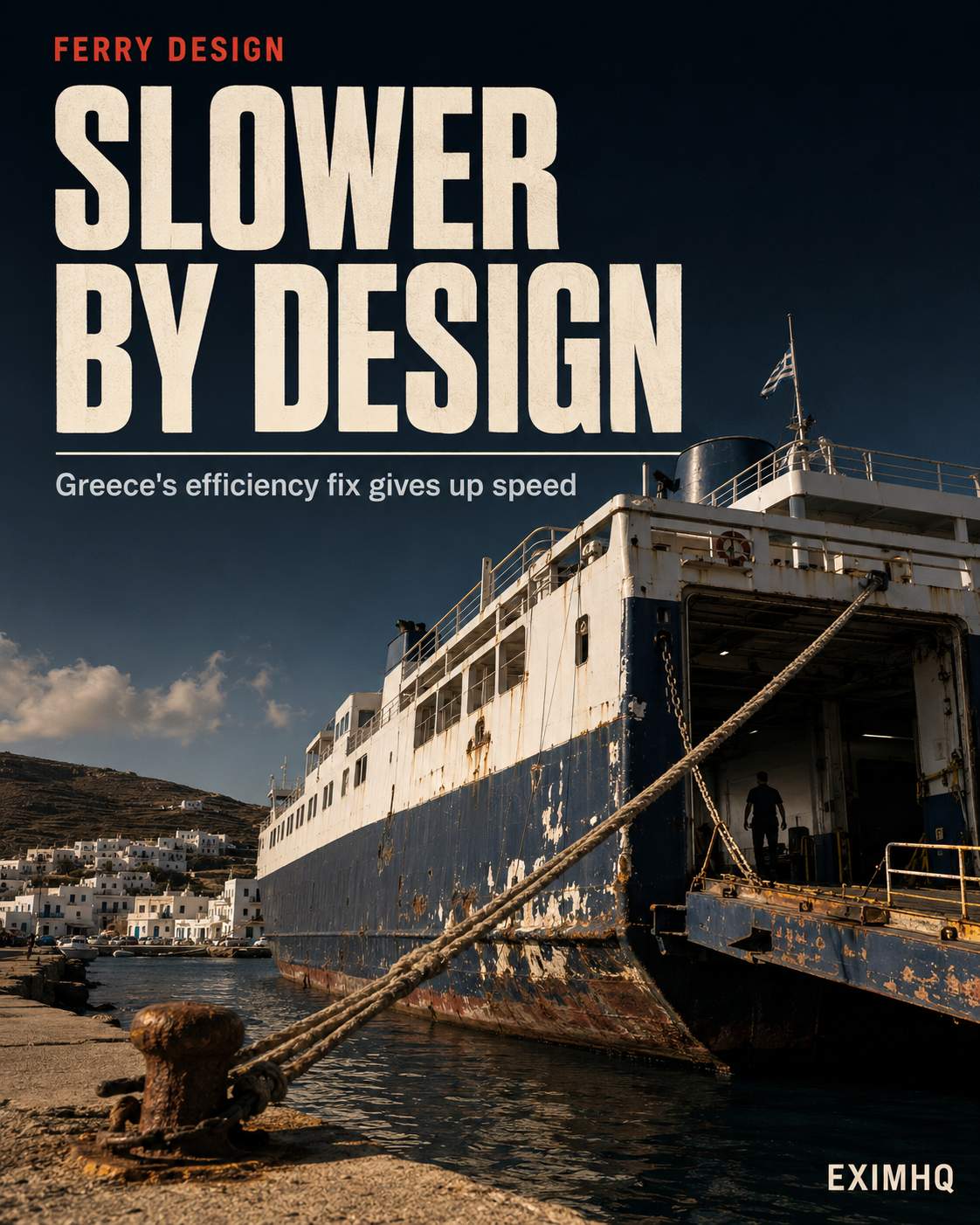
Greece moves close to 50 million ferry passengers a year, and it does so on boats that are getting old. Operators are boxed in by regulated fares, sharp seasonal swings, and a running-cost line that keeps climbing. The concept lands straight into that squeeze.
The Greek ferry design turns on operating profile, not top speed
Foreship built the concept around how the ship runs day to day, not how fast it can go. Speed has always been the Greek ferry sector’s selling point and its fuel bill in the same breath. The new design steps off that treadmill and settles on more moderate speeds.
The physics rewards the choice. Drop the design speed a few knots and the fuel burn falls out of proportion to the time lost, because the power a hull needs rises far faster than its speed. The last few knots are always the most expensive ones to buy. Trade them away and the operating economics move in the operator’s favour.
Ari Huttunen, Marine Design & Engineering Projects Principal Consultant at Foreship, framed the aim as fitting in every essential function for safe, reliable service “while avoiding unnecessary complexity.” That is the whole thesis in four words.
New stability rules are already reshaping the hull before it is built
Foreship drew the concept against Europe’s updated ferry stability requirements, which are already pushing dimensions and passenger capacity across the continent. Those rules were built into the design from the earliest stages rather than bolted on later.
That sequencing is the point. Designing around a standard while it is still settling is cheaper than redrawing a finished vessel once the standard bites. Foreship has effectively priced the regulation into the concept instead of paying for it twice.
ALSO READ:MOL and IBM Japan Build AI Ship Monitoring Platform
What this means for Greek fleet renewal
For operators facing fleet renewal, the concept reframes the capital question around total cost rather than top speed. Greek fares are regulated, which changes the arithmetic in a way that matters.
Here is the mechanism. A faster, pricier ship cannot earn its premium back at the ticket counter, because the operator does not set the ticket price. So the return has to come from somewhere else, and the only lever left is what the vessel costs to build and to run. A moderate-speed, low-complexity design attacks exactly that.
The economics were pointing here before Foreship drew the lines. Fares are capped, so a speed premium cannot be recovered through revenue. Add stability rules that are tightening anyway, and a fleet that has to be replaced regardless, and the low-complexity, moderate-speed vessel stops being one option among several. It becomes the one the math keeps arriving at. Watch whether Greek operators specify it into their next newbuild orders, or keep buying speed they can no longer price.