
India unveiled its first Made-in-India shipping container on Friday at Inland Container Depot Dadri, built to EXIM grade for Maersk the first domestically produced box under a ₹10,000 crore scheme to end the country’s reliance on imported containers.
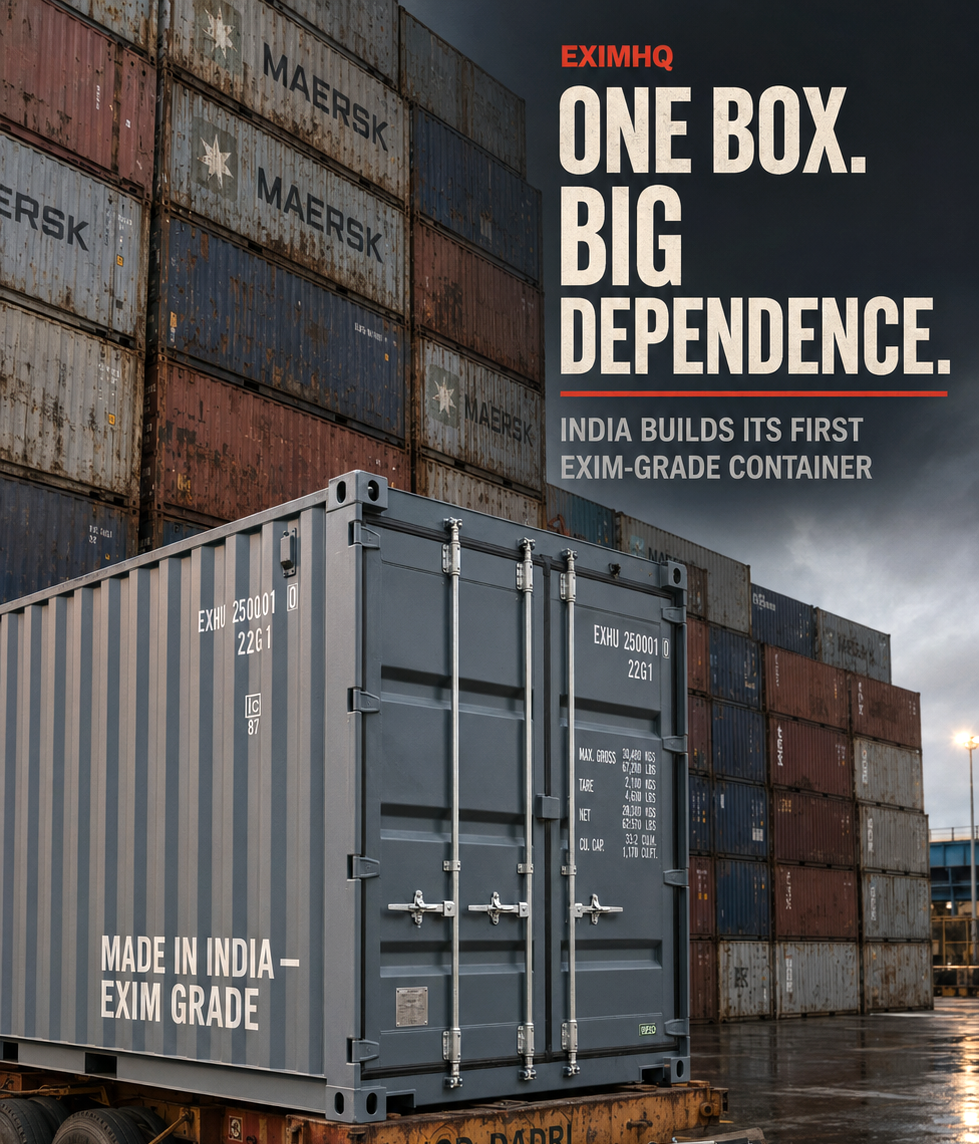
Containers are the one piece of shipping infrastructure India has never made at scale. Nearly all of the world’s dry cargo boxes come out of China, and Indian exporters have paid for that dependence in both price and availability for years. The Dadri unveiling is the first physical proof that the equation might change.
India’s first Made-in-India shipping container
Ports, Shipping and Waterways Minister Sarbananda Sonowal unveiled the container on Friday at ICD Dadri, with the box slated for deployment by global carrier Maersk. The government dates the achievement to sixteen months after Prime Minister Narendra Modi set the goal of making India a container manufacturing hub. That is a fast turn for heavy industry, and a deliberate one to put on display.
Netherlands Ambassador to India Marisa Gerards attended, alongside Maersk representatives and trade officials. That a single container drew an ambassador tells you the unveiling was about signal as much as steel.
A ₹10,000 crore scheme aims to build a domestic container industry
India’s ₹10,000 crore container manufacturing scheme commits ₹10,000 crore to standing up a domestic industry capable of producing containers to international specification. New Delhi expects it to pull in investment, create jobs, and move technical capability onshore.
The logic is plain once you strip it down. A container is steel, welding, flooring and a corner-casting standard not complex to build, but brutal to build cheaply without volume. China won the category on scale and two decades of head start. India’s scheme is an attempt to buy its way onto that curve.
ALSO READ:Maersk Eyes India-Made Containers Over China
Indigenous production targets container cost and availability
Domestic manufacturing is meant to lower logistics costs, improve box availability, and cut the supply chain exposure that comes with importing containers. For an export economy trying to grow its share of global trade, owning the boxes matters almost as much as filling them.
What this means for India’s logistics cost base
For customs teams and trade analysts, the container is not the story the supply security is. Anyone who lived through the 2020–21 box shortage, when empty containers stranded in the wrong hemisphere sent freight rates to records and left Indian exporters bidding for equipment that did not exist, understands what domestic supply is worth. Every Make in India milestone gets a photograph. The ones that matter get a second order.
Whether the box becomes an industry depends on numbers that were not on stage on Friday: per-unit cost against the landed price of a Chinese container, and how much of that gap the scheme has to keep covering.
One container unveiled for a minister proves the line works, not that the economics do. China did not come to dominate box manufacturing by accident. It won on steel cost, volume and a long head start, and ₹10,000 crore buys India a running start, not parity. The number to watch next is not this one. It is the first commercial order Maersk places at scale once the subsidy stops carrying the price, which is when everyone finds out whether India built a container industry or a ceremony.